
August 2026
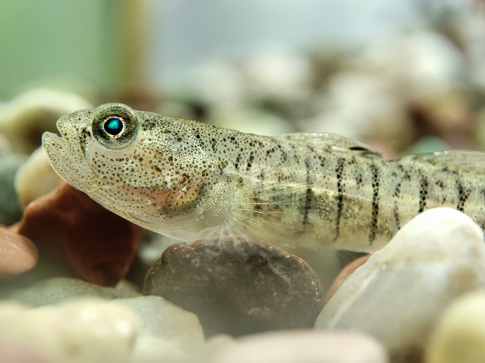
Trichonida Dwarf Goby
Economidichthys trichonis
Image © Yannis Kapakos, Hellenic Centre for Marine Conservation; Institute of Inland Waters.
Trichonida Dwarf Goby Economidichthys trichonis, is Europe’s smallest inland fish and endemic to Western Greece. It is an iconic species of the Greek freshwater ichthyofauna. It is classified as Endangered (EN) in the IUCN Red List (Ford, 2024), due to its extremely limited (but still unclear) distribution, population fragmentation, and the intense pressures of its habitats (Barbieri et al., 2015; Kalogianni et al., 2023a). The above makes it a high-risk species, with an increased probability of downgrading to Critically Endangered (CR) in the near future. Today, confirmed populations occur in Lakes Trichonis and Lysimachia, where E. trichonis coexists with its congener Economidichthys pygmaeus. However, its distribution within the wider Acheloos River basin remains poorly understood. These uncertainties currently limit the development of effective conservation planning and evidence-based management actions for the species.
Given its restricted range and increasing environmental pressures, E. trichonis represents a high conservation-priority freshwater fish species with an elevated risk of future population decline.
Biologists at the Hellenic Centre for Marine Research, Institute of Marine Biological Resources and Inland Waters have been studying this goby in the laboratory, to learn more about its reproductive strategies and behaviour. Within the framework of the “NANOGOBY” project, the aim is to successfully breed the species in laboratory conditions for the first time, using specially designed aquaria replicating the light and temperature fluctuations in Lake Trichonis.
Nomination: Brian Zimmerman, FFSG Co-Chair