
2026
January
Red-finned Blue-Eye (Scaturiginichthys vermeilipinnis)

Image © Dean Gilligan
The Red-finned Blue-Eye is one of Australia’s smallest vertebrates and one of its most conservation-dependent. Endemic to a tiny complex of springs in central-western Queensland, its entire wild range covers less than half a hectare. Its extreme micro-endemism means even minor habitat changes can be catastrophic.
The species’ collapse was driven by degradation of its fragile spring habitats and the introduction of Eastern Mosquitofish (Gambusia holbrooki). Introduced in the 1990s for mosquito control, Gambusia spread rapidly and outcompeted the endemics. In most springs, the Red-finned Blue-Eye vanished within a few seasons. Impacts from cattle and feral pigs further degraded water quality and vegetation. The fish was listed as Critically Endangered in 1996 and later named among the world’s most endangered species.
In 2008, Bush Heritage Australia purchased the land to protect the Blue-Eyes. Livestock were removed, feral animals controlled, refuge populations established, and the first successful captive-breeding programme developed. Intensive management now focuses on excluding and eradicating Gambusia, restoring springs, and returning populations. Although still highly vulnerable, these efforts have driven a major recovery. To learn more about this magnificent little species, check out SHOAL’s Tiny Fishes report here
Nominated by Michael Edmondstone
(There was no February Fish)
March
Evrotas chub (Squalius keadicus)
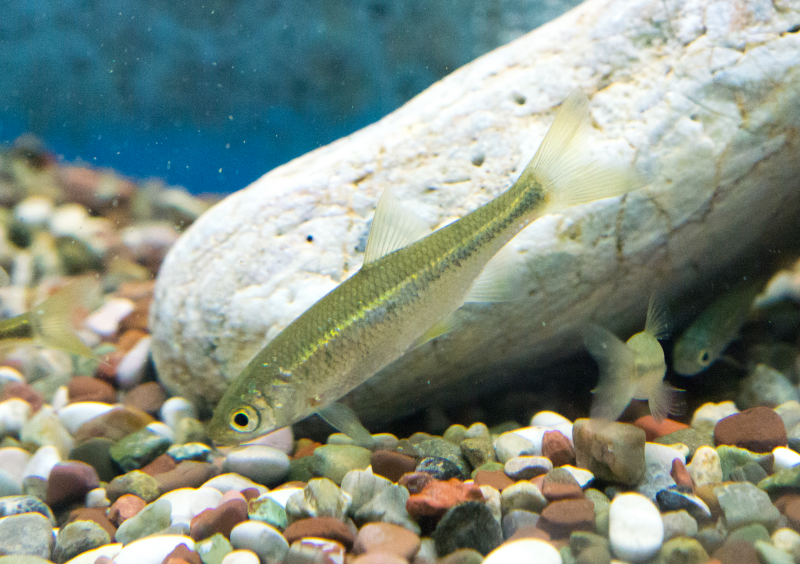
Found only in the Evrotas River basin (southern Greece), the Evrotas chub, Squalius keadicus, is a remarkable endemic species of clear, fast-flowing waters. It is regarded as a relict with evolutionarily distinct lineage, with origins dating back to the Miocene Period, and is therefore considered among the oldest freshwater fish lineages in Europe. Within the main channel of the Evrotas, the species occurs in the upper and middle reaches, becoming scarce downstream. It has disappeared from almost all tributaries, persisting only in the largest one, the Oinous (Kelefina).
The species faces severe pressure from intensive water abstraction, which causes widespread summer drying and fragmentation of its habitat, while human-made barriers further disrupt connectivity. During winter, pollution from olive mills and citrus-processing plants imposes additional stress. In response, recent projects have attempted to reverse its decline; the ongoing CASTOR project (https://castor-project.gr/) is currently working to improve its prospects through conservation translocations, ex situ breeding, nature-based fish passages, and creating beaver dam analogues to retain water during dry periods.
April
Racovitza’s Rudd, Scardinius racovitzai
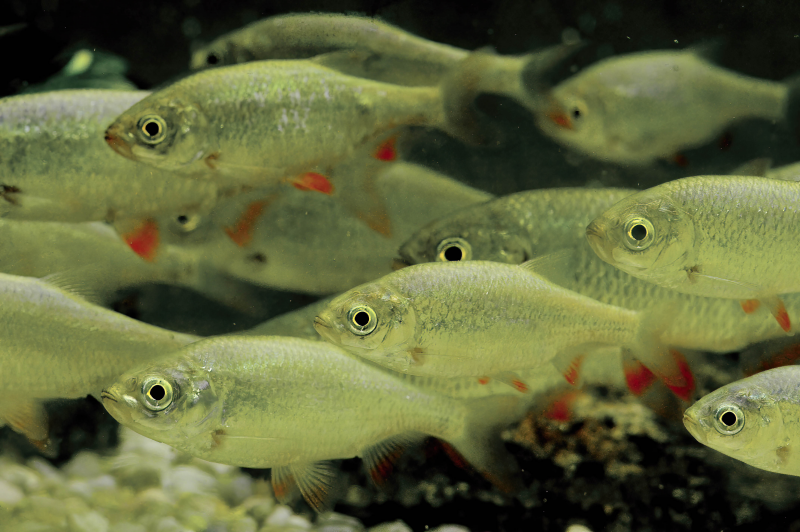
Racovitza’s Rudd (Scardinius racovitzai) is endemic to a single small lake in northwestern Romania. Its natural population was lost in 2014 when the lake dried up due to water abstraction, making it the only European freshwater fish to have become Extinct in the Wild in the past 15 years.
Today, it survives only thanks to captive assurance populations maintained in several European countries, with the aim of ultimately returning it to the wild. Find out more about this species, and the other fishes of Europe in the new FFSG supported European red list of freshwater fishes published this week: https://op.europa.eu/en/publication-detail/-/publication/7037c5b5-12c0-11f1-8870-01aa75ed71a1/language-en
More information about conservation efforts:
- Ex situ conservation of the thermal rudd Scardinius racovitzai
- Artificial propagation of the endangered Rumanian endemic warm water rudd (Scardinius racovitzai Müller 1958, Cyprinidae, Cypriniformes) for conservation needs
- Ex situ conservation of the thermal rudd (Scardinius racovitzai): a general review of work and results
- Racovitza’s Rudd Captive Breeding Program at Schönbrunn Zoo, Vienna, Austria
Nomination: Matt Ford, FFSG Member and Lead Author of the European Red List of Freshwater Fishes Report 2026.
(There were no Fishes for May to July)
2025
January
Blue Lyretail Killifish, Fundulopanchax gardneri
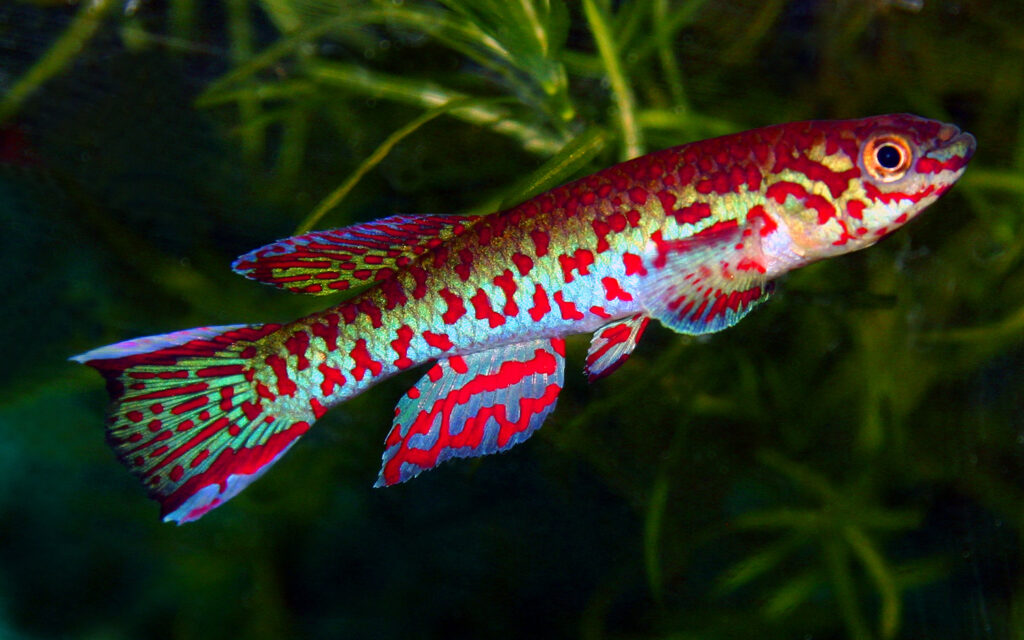
Found in brooks, swamps, pools and streams in humid forested and highland savannah and rainforests of Cameroon and Nigeria. The species has evolved a semi-annual spawning strategy to adapt to the unpredictable nature of the freshwater ecosystems within which it is found. This means that the eggs can survive a period of drying as well as being viable when permanently submerged. It is a bottom spawner and has a one-month incubation period. The species is assessed as Least Concern ( https://www.iucnredlist.org/species/182030/134759395) by IUCN Red List of Threatened Species™ although there are a number of threats that may be significant declines across its range including shifting agriculture, logging and urban development.
February
Mangarahara Cichlid, Ptychochromis insolitus
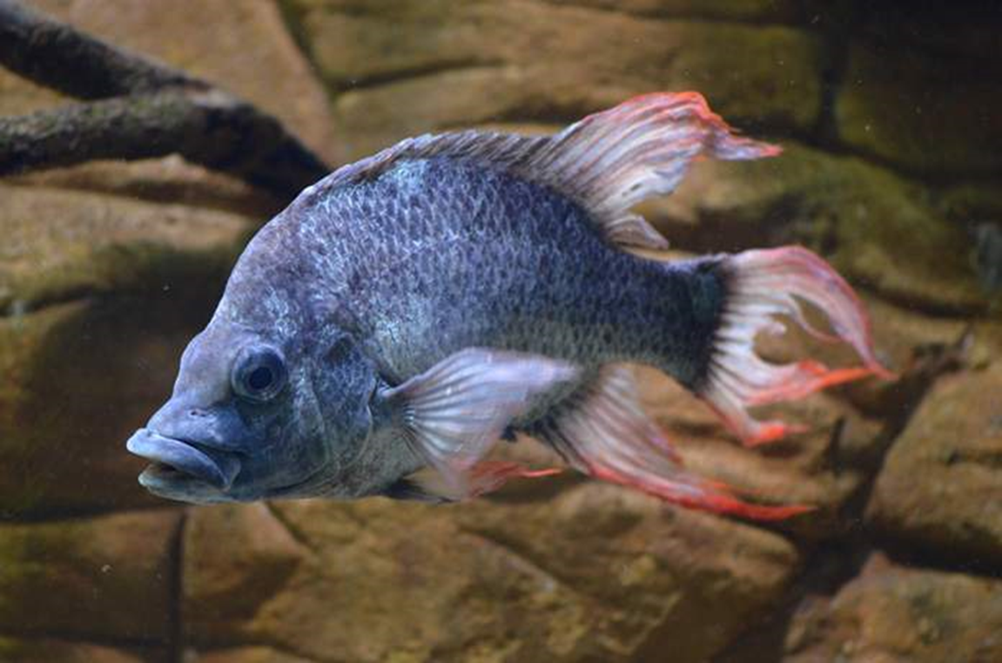
The Mangarahara cichlid or joba mena, Ptychochromis insolitus, is endemic to the Sofia River catchment of Madagascar. The species is assessed as Critically Endangered by IUCN Red List of Threatened Species™ due to its small range, declining population, and threats from loss of habitat and loss of water caused by upstream dams. The species received global attention in 2013 when London Zoo launched a global search for a girlfriend for their two male fishes in a bid to start a conservation breeding programme. Captive populations have since significantly increased, and captive bred individuals can now be found in 23 institutions globally. This is particularly important as the situation in the wild has further declined. In 2013, a survey of the Amboaboa river near Marotandrano found a small population of the Mangarahara cichlid, however, a survey of the same river in 2024 found no evidence of the species.
March
Acıgöl Killifish, Anatolichthys transgrediens
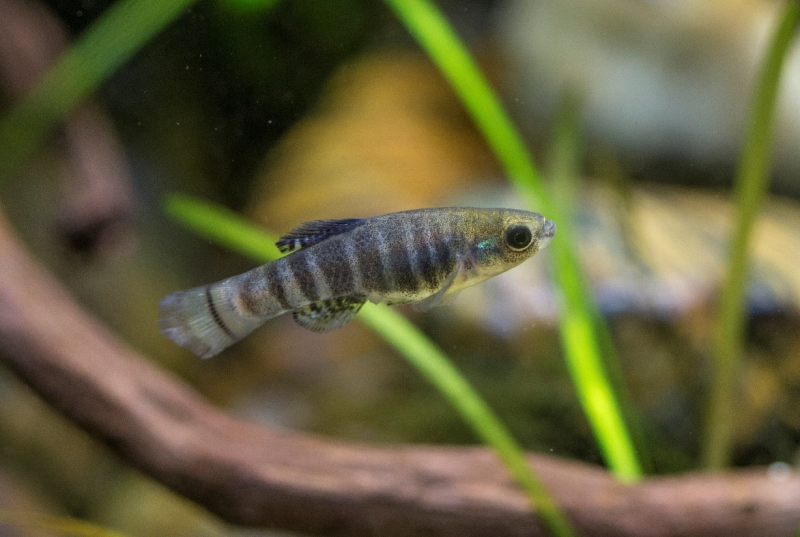
The Acıgöl killifish, Anatolichthys transgrediens is endemic to Lake Acıgöl, Southwest Turkey. The lake is approximately 35m² and is known as the ‘bitter’ lake due to the high sulphate springs that feed into it. The killifish is currently classified as Critically Endangered by the IUCN Red List of Threated Species ™ due to its limited range. Invasive species such as the Mosquitofish, Gambusia holbrooki, salt mining, pollution, and agricultural practices have been the main pressures on this species and its habitat. In June 2024, the Acıgöl killifish was given an IUCN Green Status of Critically Depleted with a Species Recovery Score of 15%. The Turkish Ministry of Agriculture and Forestry, Hacettepe University and Istanbul Aquarium relocated a population from Lake Acıgöl to Istanbul Aquarium in Sept 2024 to safeguard this species in an ex-situ capacity. This killifish is a priority within the EAZA Cyprinodontidae and Aphaniidae European Endangered Programme (EEP) and is currently cared for in several zoos and aquariums in Europe. Collaborations between Turkish institutions and European Zoos and Aquariums are crucial to protect these insurance populations as their wild counterparts could be lost forever.
Nominated by FFSG Member Alex Cliffe
April
Zeravshan Dace, Leuciscus lehmanni
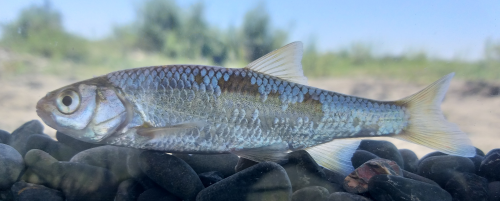
The Zeravshan dace, Leuciscus lehmanni, is a native freshwater fish species endemic to the Zeravshan and Amu Darya drainages, part of the Aral Sea Basin in Central Asia including Uzbekistan, Tajikistan and Turkmenistan. Morphologically, it is characterized by dorsal fin rays numbering III 7-8, anal fin rays III 8-10, and lateral line scales ranging from 42 to 48. The species exhibits a maximum recorded size of 22 cm in length and 160 g in weight. Its distribution, biology, and ecology remain poorly studied, but it is known to inhabit lowland and foothill regions of the Zeravshan River, typically in areas with slow-flowing water and substrates dominated by mid-sized rocks. It coexists with other native fish species, including Capoeta heratensis, Schizothorax fedtschenkoi, and Triplophysa uranoscopus. The Zeravshan dace is primarily algivorous, feeding on algae, but also consumes insect larvae.
The species faces significant threats from anthropogenic activities, including damming, habitat alteration, and the introduction of invasive fish species. Additionally, extensive soil excavation in the Zeravshan River basin has led to the degradation and destruction of its suitable habitats. Due to limited research and ecological data, the conservation status and population trends of the Zeravshan dace remain uncertain, necessitating further studies to inform effective management and protection strategies.
Nominated by FFSG Member Akbarjon Rozimov, Uzbekistan
May
Barred Tail Pearlfish, Notholebias minimus
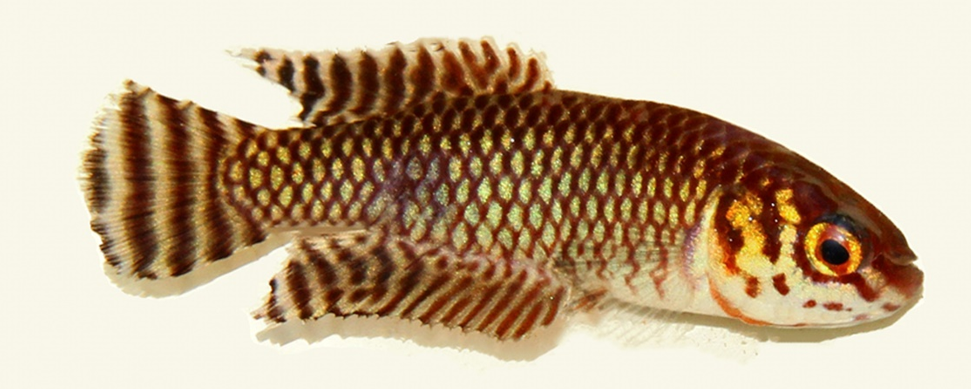
Image © Yuri Borba
The Barred Tail Pearlfish, Notholebias minimus, a threatened species of South American Killifish (Rivulidae), inhabits temporary wetlands in the Atlantic Forest biome, in the coastal plains of the southeastern region of Brazil, in the State of Rio de Janeiro. Its distribution is limited to areas west of Guanabara Bay, ranging from the Jacarepaguá Lagoon System to the Guarda River basin, in the municipalities of Rio de Janeiro, Seropédica, and Itaguaí. The species, like most annual Killifish, has a restricted geographic distribution, low dispersal capacity, small body size, rapid growth, pronounced sexual dimorphism, and a life cycle synchronized with the rainy season. During the dry season, the eggs in the substrate remain in embryonic diapause, awaiting the next rainy season to initiate the life cycle at the onset of the rains. The species is assessed as Endangered by the IUCN Red List of Threatened Species™. Agricultural expansion and unplanned urban sprawl are the primary causes of significant population declines across the species’ distribution, due to habitat fragmentation, landfilling, cattle grazing, pesticide use, and draining of wetlands. However, countermeasures are being taken to conserve this species. It is included in the Brazilian National Action Plan for the protection and development of strategies for the conservation of endangered species of the Rivulidae family, known as the “PAN Rivulídeos” of the Chico Mendes Institute for Biodiversity Conservation (ICMBio), linked to the Ministry of the Environment.
Nominated by FFSG Members Carlos H. P. Luz, and Paulo A. Buckup, Brazil
June
Lake Victoria’s Haplochromine superflock
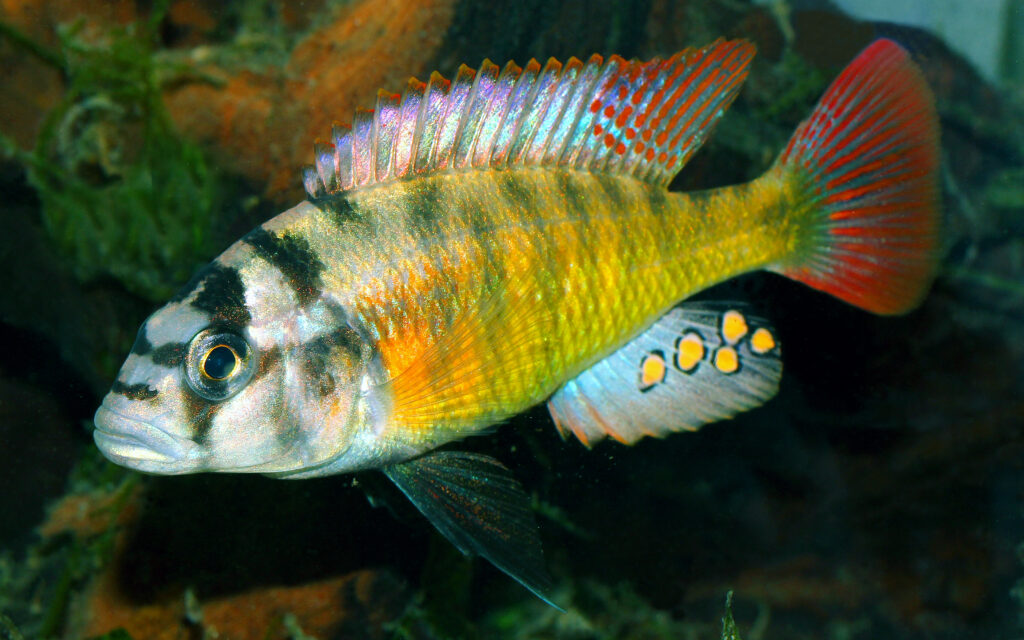
Images © Paul Loiselle
In honour of our Late Chair Dr Paul V. Loiselle, FFSG’s Species of the Month for June is the entire superflock of Lake Victoria’s endemic Haplochromine cichlids. These closely related small multi-coloured cichlids, generally known as Haplochromine cichlids or Fulu, provide an astounding example of adaptive radiation – morphologically, ecologically, and behaviourally. They were once the most speciose fishes in Lake Victoria with around 500 species. Unfortunately, many have yet to be described or studied by scientists, and many are now rarely seen and feared extinct. A combination of factors are believed to be the cause, including the introduction of the non-native invasive and piscivorous Nile perch, Lates niloticus, overfishing. Significant changes to the lake system from agriculture, including tea and cotton plantations, has resulted in pollutants and sediments being released into the lake. An increase in water turbidity from sediment pollution is believed to have impacted upon the reproductive success of these primarily visually orientated fishes.
July 2025
Clanwilliam sandfish, Labeo seeberi

Images © Jeremy Shelton
The Clanwilliam sandfish, Labeo seeberi, is South Africa’s most threatened migratory freshwater fish. Once widespread throughout the Olifants-Doring River system, today they are threatened by dams which prevent upstream migration to their spawning grounds, and predation by non-native species. There are now only two known tributaries where sandfish still spawn: the Oorlogskloof and Biedouw rivers. To prevent the extinction of the Clanwilliam sandfish, the Freshwater Research Centre and partners launched the Saving Sandfish project in 2020. This led to the largest freshwater fish rescue on record, with teams of scientists, farmers and members of the local community all involved. Together, they relocated fish above reservoir walls, which were cleared of non-native fish to create sandfish sanctuaries. Once juveniles have reached 15 cm they are considered ‘bass-proof’ (i.e. too large to be eaten by bass) and are released back into the wild with tiny PIT tags which allow scientists to track their movements and survival. To date nearly 3,000 bass-proof sandfish have been released, and results to date show a 16.4% return rate, and a more than doubling of the size of the Biedouw spawning population.
To find out more about this species and the work to save it please read the FFSG supported report Africa’s Forgotten Fishes and watch the Saving Sandfish films which takes you on an amazing journey into the hidden world of this Endangered fish and what is being done to help it.
August 2025
Sewellia lineolata, the Gold Ring or Reticulated Hillstream Loach

Images © Kathy Hughes
This little flattened thumb-size fish with its attractive colouring and blinking eyes is found in the mountains of central Vietnam, in fast-flowing, highly oxygenated waters where flow rates are so high that competitors would be washed away. To cope with these extreme flow rates, hillstream loaches have evolved adaptations to stick to the bottom, equivalent to the downforce generating wings and skirts of F1 racing cars, and scale architecture reminiscent of the drag-reducing riblets of mako sharks; research sees potential applications of its adaptations for engineering designs that need to be dynamically attached to surfaces in flow, e.g. tags to fish, temporary medical units in bodily vessels, and inspection devices on ships or aeroplane hulls https://doi.org/10.1101/851592 .
These little fish have also lately become popular in the aquarium trade, but need very specialised conditions; most fish will not receive these and live short unhealthy lives. https://www.biology.ox.ac.uk/article/extreme-flow-for-hillstream-loaches
September 2025
Hucho hucho, the Huchen or Danube Salmon

Images © Institute REVIVO
The Danube salmon or huchen (Hucho hucho) is one of the largest members of the salmonid family (Salmonidae). The Danube salmon is an endemic and flagship species of the Danube River basin. As a result of significant population declines, the species is listed as Vulnerable (VU) according to IUCN criteria (IUCN Red List, 2024).
Its charisma is not based solely on appearance or specific behavior, it primarily stems from its size and strength. Adults can grow up to 140 cm in length and weigh up to 30 kg, with a lifespan that can exceed 15 years. It is a predatory fish: adults primarily feed on other fish, while juveniles feed on aquatic invertebrates and fish larvae.
Danube salmon spawn in pairs in small tributaries, where females dig spawning pits in gravel beds to deposit their eggs. Juveniles initially remain in these smaller streams but later migrate to larger rivers. The species is territorial and inhabits large pre-Alpine and lowland rivers of the Balkan Peninsula. It is considered a medium-range migratory species.
Over 1,800 kilometers of rivers with self-sustaining populations have been identified in the Balkans, representing 65% of the species’ total distribution range. Key rivers include the Drina, Kolpa, Lim, Sava, Tara and Una.
The greatest threat to the Danube salmon is habitat loss, resulting from both river fragmentation caused by hydropower development and river regulation. In some areas, poaching remains a significant issue, as the species is highly prized in sport fishing. In the past, polluted waters also severely impacted its populations.
Despite various conservation programs, planned and ongoing hydropower projects, all over the Balkan peninsula, represent a serious threat. Some dams are already under construction, while many more are proposed. Their implementation would further isolate populations and destroy its habitat and could bring this species to extinction.
Institute REVIVO, an NGO from Slovenia, is involved in the international project Danube LifeLines, striving to improve conditions for the conservation of migratory fish species
Nominated by Žiga Tertinek, Institute REVIVO
November 2025
Sawbwa barb, Sawbwa resplendens

Image © Thadoe Wai
Residing around the vegetated edges of shallow spring fed pools and slow flowing canals, the Sawbwa barb (also known as the Asian Rummynose) is a small shy cyprinid species endemic to Eastern Myanmar. Their distribution is primarily within the Inle watershed in Shan region, possibly extending downstream in Kayah region as well. Sawbwa barbs are named after the Shan / Tai hereditary title for past ruling lords known as Chaopha/Sawbwa, which translates as “Lord of the heavens”. Sawbwa barbs have no scales on their body; males have a silvery blue colour with vibrant red coloured heads and tail tips, and females are olive coloured with a black spot at the end of their stomachs. They are a gregarious species, usually found in small shoals and oftentimes swimming together with other similarly small fish species like red dwarf rasboras and emerald dwarf danios. Like other small cyprinids they are egg scatterers, with females capable of laying a small clutch of eggs into thick aquatic vegetation every few days. Within their limited natural habitat, these fish are threatened on multiple fronts by human activity; pollution from agriculture and urban waste would poison the waters they live in. Predation and competition from invasive species such as Nile tilapia and mosquitofish have placed pressure on their populations. Demand and collection for the aquarium trade has further exacerbated the problem as well. With these threats, there are few areas remaining where these Sawbwa barbs could still hold on. With WWF-Myanmar’s 2nd round of eDNA sampling in the Inle lake watershed, we were able to locate habitats where this little fish still has a strong foothold.
Nominated by Thadoe Wai, WWF-Myanmar and FFSG Member
December 2025
Peloponnese Valencia Toothcarp), Valencia robertae

Image © Yannis Kapakos
Only officially described and named by scientists in 2014, this Critically Endangered species is unique to Greece and found only in a few tiny locations in Western Greece and, despite its name, is no longer found in the Peloponnese where it is thought to be extirpated.
The species is one of only three species from the family Valenciidae and all are confined to Europe. They are considered glacial relicts, species that survived the last ice age in Europe in the two areas not covered in ice. They are now found only in lowland spring areas, near to the coast but in freshwater habitats with low flow and consistent temperatures year-round.
Male Valencia are more colourful than females and during spawning have striking barring and yellow fins as well as a dark spot on their side. The species is an egg-layer and deposits eggs on substrates such as gravel or aquatic plants. The larvae and fry are entirely independent and feed on tiny, microscopic organisms. As adults they feed on a variety of invertebrates including the larvae of aquatic insects.
The species is threatened from the introduction of the alien invasive mosquitofish, Gambusia holbrooki, and also from pollution, pesticides, and the loss of spring habitats due to human over-exploitation.
Several groups are working to save this species from extinction, including the Hellenic Centre for Marine Research’s Institute of Marine Biological Resources and Inland Waters as well as the European Association of Zoos and Aquaria.
Further reading:
EAZA Ex-Situ Programme (Toothfish)
Valenciidae Family EEP Annual Report for the EAZA Freshwater Teleost Taxon Advisory Group 2022
Nominated by Brian Zimmerman, FFSG Co-Chair